

The Role of Technology in Medical Education


 Jan 18,2026
 By jordon7847126@gmail.com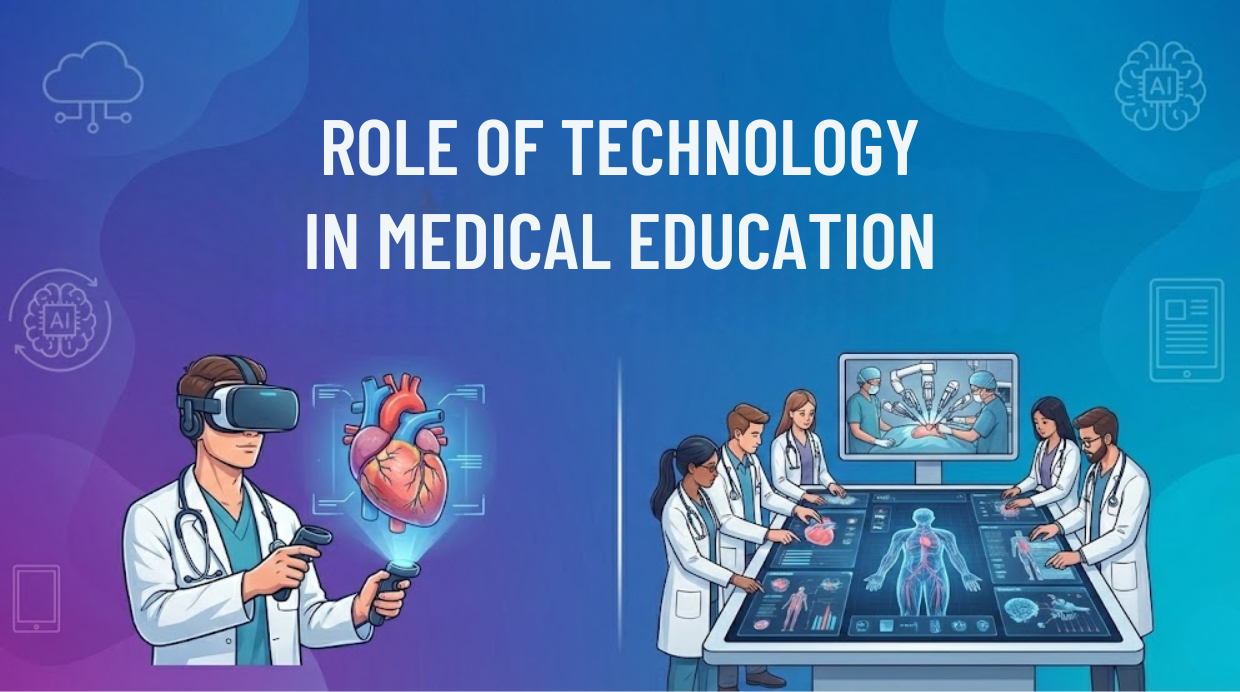
The way doctors are trained is changing very quickly. The landscape of medical training is being fundamentally reshaped by technology, which enables students to utilize virtual anatomy and AI simulations for enhanced learning. We have moved far beyond just reading heavy textbooks. Today, medical students practice surgery in virtual reality (VR) and use Artificial Intelligence (AI) to learn how to diagnose patients. Technology is completely reshaping medical education, making it more interactive and efficient.
Whether you want to be a doctor, are currently studying MBBS, or are just interested in healthcare, this guide explains how technology is making medical training better — especially in Pakistan and South Asia.
Table of Contents
- Overview of Technology in Medical Education
- Medical Simulation and VR Tools
- AI and Digital Learning Platforms
- Benefits of Technology
- Technology in Pakistan & South Asia
- Comprehensive Digital Resources by Tyaari
- Future Innovations
- Frequently Asked Questions
Overview of Technology in Medical Education
Technology is bridging the gap between learning theory and practicing actual skills. Tools range from virtual dissections to online training. Artificial Intelligence (AI) is also playing a big role. AI platforms can give students personalized quizzes that find their weak spots and suggest extra practice. Global experts believe AI will revolutionize how doctors are trained, leading to better patient care.
In the past, online learning wasn't very common in Pakistani medical colleges. However, the COVID-19 pandemic showed everyone how important digital tools are. Now, colleges are using video conferencing and online management systems for lectures. This ensures that learning continues even during disruptions and makes education accessible to more students.
Medical Simulation and VR Tools
Modern medical schools use high-tech simulators and Virtual Reality (VR) headsets. These tools allow MBBS students to practice surgeries safely without any risk to real patients.
For instance, the Aga Khan University (AKU) uses advanced simulators. They have a system where a patient’s CT scan is turned into a 3D hologram. Students can "touch" and practice on this hologram to build muscle memory before they ever enter a real operating room.
There are also tools for virtual anatomy. Instead of just looking at pictures, students can perform dissections on digital bodies. This makes learning anatomy much more exciting and effective. These simulations also help students practice teamwork and decision-making in emergency situations.
AI and Digital Learning Platforms
Digital platforms, including mobile apps and video portals, are changing how students study. These platforms often use AI to create a custom study plan for each student.
In Pakistan, Tyaari is a leading app for students preparing for medical entrance exams. It leverages technology to help students learn more effectively. Through its comprehensive digital resources and smart tools, Tyaari provides students with instant access to solutions and explanations, acting like a 24/7 study companion that ensures no concept remains unclear.
Benefits of Technology in Medical Education
Using technology in medical training has several clear advantages for students and educators:
- Accessibility: Students can learn from anywhere using apps and online lectures.
- Safety: Students can make mistakes in a virtual simulation without hurting a real patient. This helps them learn safely.
- Efficiency: AI tools give instant feedback, so students know exactly what to improve.
- Preparation: Using digital tools during school prepares doctors for modern hospitals, which use electronic records and smart devices.
Technology in Medical Education: South Asia & Pakistan
Universities in South Asia, especially in Pakistan, are adopting these new technologies fast.
- Aga Khan University (AKU): A leader in this space, AKU has a dedicated innovation center with simulators for surgery, heart procedures, and more.
- University of Health Sciences (UHS): Based in Lahore, UHS is also adding virtual labs to its MBBS programs.
- EdTech Companies: Local companies are helping too. Tyaari is the top platform for MDCAT preparation. As of 2025, the Tyaari app has over 1 million downloads. Many students who used Tyaari have successfully entered top colleges like KEMU and Dow Medical College.
Comprehensive Digital Resources by Tyaari
Tyaari is a great example of how technology helps students in Pakistan. It offers a complete online system for medical aspirants:
- High-Yield Smart Notes: Master complex concepts effortlessly with concise, chapter-wise digital notes designed for rapid revision and maximum retention.
- Exam-Simulation Mode: Build exam stamina with chapter-wise timed tests and a vast repository of practice MCQs that perfectly mirror real exam pressure and difficulty.
- Performance Analytics: Go beyond simple scores with advanced insights that track your speed, accuracy, and progress, empowering you to identify and fix weak areas instantly.
Future Innovations in Medical Training
The future looks even more high-tech. Soon, Augmented Reality (AR) glasses might project a hologram tutor to guide students as they practice. Researchers are even looking into the "Metaverse," where students can walk around in a virtual hospital to practice decision-making.
We will also see smarter AI (like advanced chatbots) acting as virtual patients for students to practice talking to. As internet speeds get faster (5G), remote surgeries and virtual conferences will become normal parts of training.
Frequently Asked Questions
What technology is used in medicine?
It includes imaging tools like MRI, robotic surgery, telemedicine, and educational tools like VR simulators and AI apps.
What is the latest tech in education?
The newest trends include AI platforms, VR/AR simulations, and learning in the metaverse.
What is medical technology?
These are tools used to diagnose, treat, and monitor patients, as well as tools used to train doctors.
How does technology help patient education?
Through apps and wearable devices that give patients personal health information and interactive advice.
How does technology impact our health?
It improves how we diagnose and treat diseases, though staring at screens too long can be a challenge. Overall, it makes healthcare better.
How does tech support teaching?
It makes learning flexible and engaging through digital quizzes, virtual labs, and AI tutors.
Which technology is best for education?
VR is great for hands-on practice, while AI is best for personalizing what a student needs to study.
What is AI in education?
AI helps create custom study paths, powers chatbots to answer questions, and tracks student progress.
